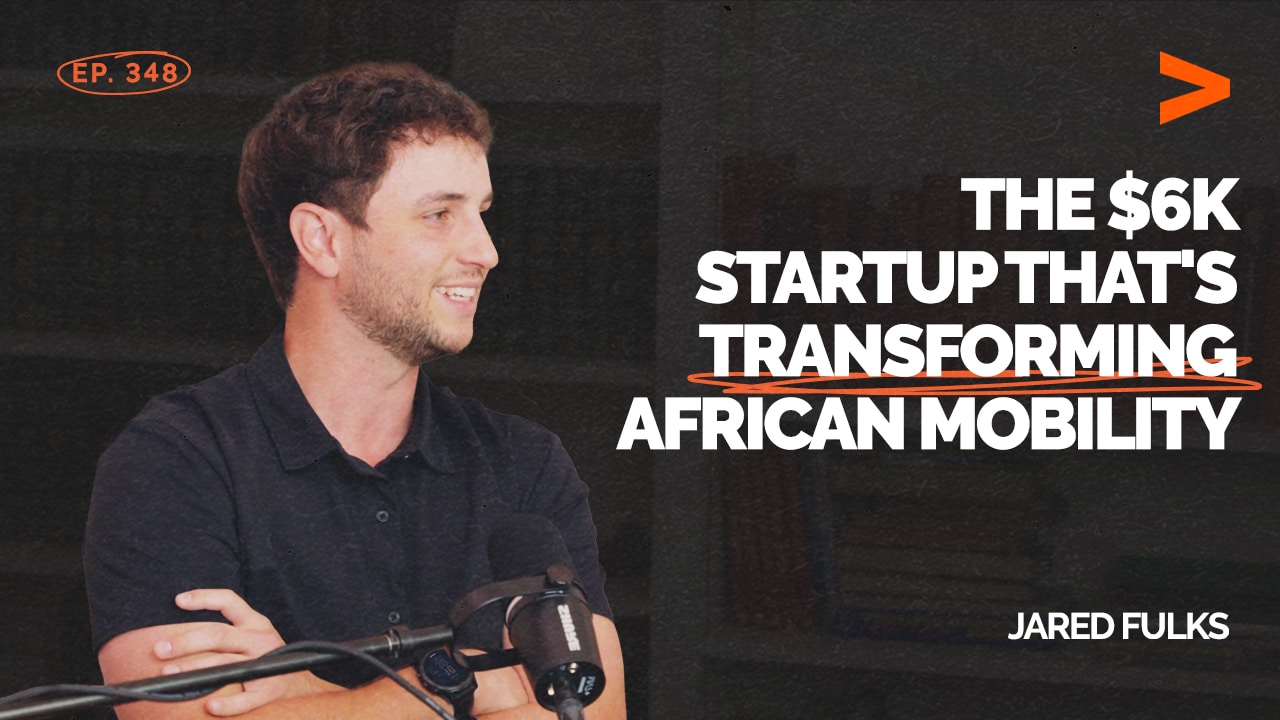
Episode 348: The $6K Startup That’s Transforming African Mobility | Jared Fulks


00:00 Four African Uber drivers in 24 hours: Divine appointments in Dallas

01:07 The Boda Boda industry: Uganda’s million-strong motorcycle taxi market

05:11 How PureFlow started: Six bikes and 250 applications

07:54 Why NOT to start in a remote village (but why it worked)

08:49 Building trust and community in tier-two cities

09:31 The incredible story of the customer who returned the bike

11:13 Tier-two and tier-three city advantages over urban markets

12:13 Africa’s youthful population and urbanization trends

13:53 Your ride-share business IS infrastructure

15:20 Partnership as a “God idea” woven into creation

17:03 How prayer preceded the partnership with Colin

17:52 Operating agreements: Trust with accountability

19:37 Scaling community: From 6 to 5,000 customers

20:24 Digital payments and maintaining fellowship

23:23 From finance company to hospitality business

23:41 The competitive landscape and bootstrapped growth model

25:49 Creating raving fans through word-of-mouth marketing

26:13 Customer lifetime value and economic transformation

27:01 The PureFlow Football Club: Creative customer acquisition

28:09 Managing a business remotely: Weekly calls and spiritual check-ins

30:13 Advice for aspiring emerging market entrepreneurs

30:52 Colin’s journey: From pilot to Uganda nonprofit to PureFlow

32:47 Being present: Walking to work and meeting Boda drivers

33:01 Luke 10 framework: Finding the man of peace

34:39 Low-cost probes: Testing ideas cheaply in Africa

35:16 The failed airstrip idea and $26 medicine story

36:01 The freneticism of African markets sparks creativity

37:42 Simple solutions to simple problems scale easily

38:48 Leading with relationship in outdoor culture

40:42 Pressing the gas: Don’t subsidize with philanthropy too soon


Source link

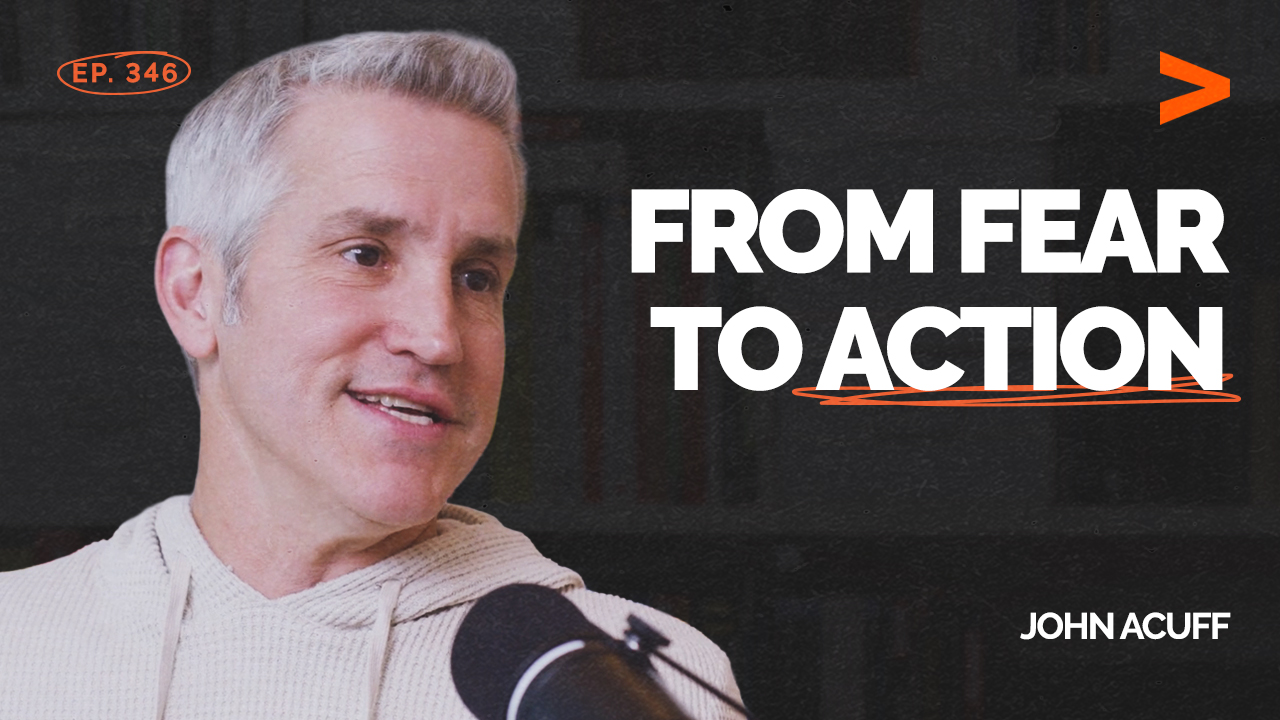
Episode 346: From Fear to Action: Rewiring Your Entrepreneur Mind | Jon Acuff


00:00 Introduction: The stories shelves tell

01:53 What shelves reveal about unexpected impact

03:10 Finding joy in the process, not just outcomes

04:41 The power of tracking hours and measuring what matters

07:07 Jon’s entrepreneurial origin story and holy frustration

10:39 Evolution from writer to entrepreneur mindset

12:38 The danger of endless desire vs. purposeful ambition

15:13 Why 40-something men are bored, not burned out

19:33 Understanding the soundtrack in your mind

22:50 The entrepreneur’s daily mental battle

26:35 Building muscle memory for positive thought patterns

28:10 Why repetition is required for mindset change

29:57 The comparison trap and office park analogy

35:03 Creating practical tools for family conversations

39:04 Fear as invitation to bravery, not enemy

43:07 Why sharing failures builds deeper connections

46:09 Learning new rhythms in life transitions

50:15 The joy of traveling and building together

55:03 Celebrating life seasons instead of mourning them

56:02 The prodigal son: A soundtrack of grace


Source link

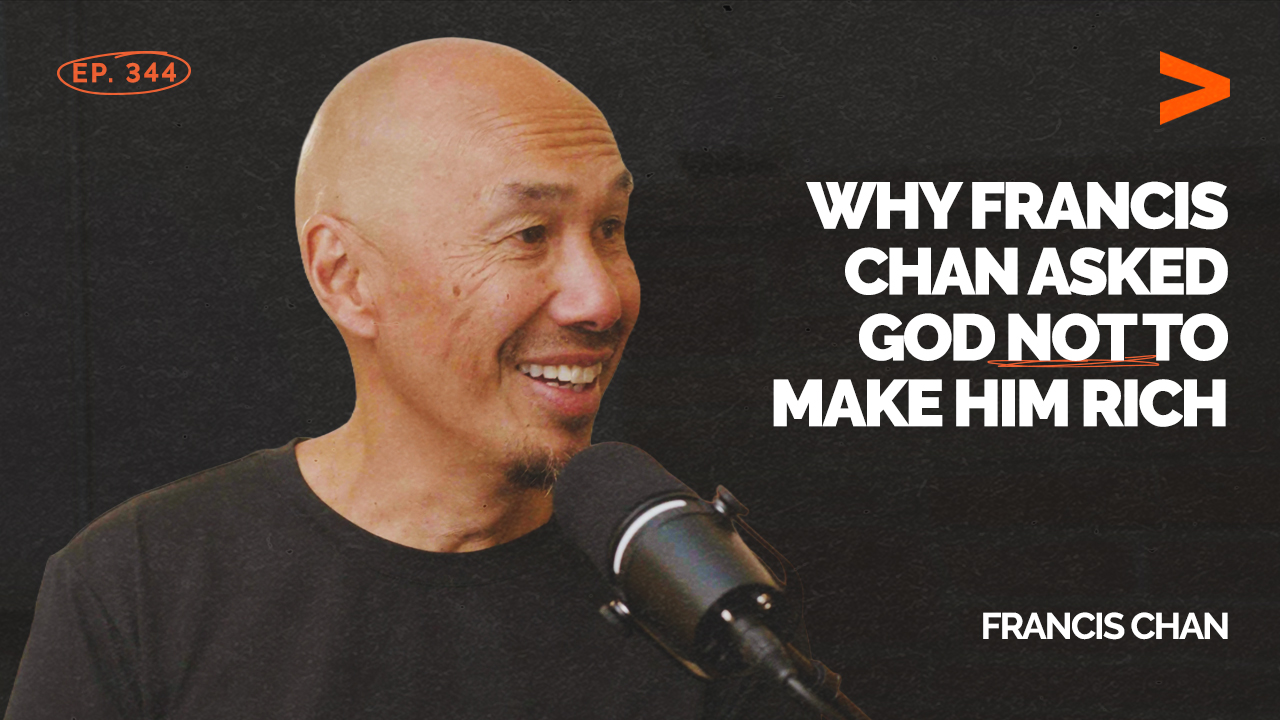
Episode 344: Why Francis Chan Asked God NOT to Make Him Rich | Francis Chan


00:00 Introduction: Hong Kong’s energy and Francis’s connection

01:28 Growing up in Hong Kong: First language and cultural familiarity

02:37 The cultural tension: Busyness vs. deep relationship with God

04:00 The treadmill analogy: Running without purpose

06:01 Looking back: What Francis would tell his younger self

08:10 The competition trap: Achievement-based mindset from young ages

10:53 The power of example over discussion

12:28 Scripture’s command: Be quick to listen, slow to speak

15:39 Deep relationships vs. reaching more people

18:06 Creating content with eternal perspective in mind

20:33 Daily surrender: 40 years of morning prayer

24:00 Why God made us: Relationship, not just work

27:02 The danger of coveting in entrepreneurship

29:03 Faithfulness vs. creativity in following God

32:32 Francis’s story: Choosing simplicity over wealth

36:13 The prayer that changed everything: “Make me rich and I’ll give it all away”

40:21 Hope and anticipation: Sports vs. heaven

44:16 Proverbs 30:7-9: The wisdom of asking God not to make you rich

47:02 Challenge to entrepreneurs: Use success to live differently

50:00 The goal of life: Looking like Jesus

54:52 Closing prayer for entrepreneurs


Source link

The Kingdom Businessman Blueprint – Phase 8: Fortifying the Foundation


This is it—Phase 8 of the Kingdom Businessman Blueprint.

Over the last seven phases, we’ve laid a new foundation for what it means to be a Christian entrepreneur. We’ve learned that building a God-first business isn’t just about growing revenue—it’s about raising up others, multiplying kingdom impact, and leaving behind a legacy that reflects Christ.

But now we face the final and most critical question: Will what we’ve built last after we’re gone?

You can’t build something that endures without also fortifying your leadership and raising up others to carry it forward.

The “Bottleneck” Dilema

As a business owner, I’ve had moments where I realized I was the bottleneck to my company’s growth. Everything depended on me. I was the face, the voice, the driver of every major decision. It felt powerful at first—but over time, it became exhausting.

What I built wasn’t sustainable because I wasn’t developing other leaders.

No one else was trained to carry the weight.

And if I stepped away, everything would come crashing down.

That realization pushed me to do something that didn’t come naturally: develop and release influence to others. I had to learn how to coach, mentor, and build leaders—not just systems.

Because if I wanted to build something that would outlast me, I had to start thinking generationally.

Many Christian businessmen are so focused on building their vision that they forget to invest in the people who will carry it forward.

We obsess over results, but neglect relationships.

We lead with authority, but fail to lead through example.

We build platforms, but never build people.

God’s Formula for Building Leaders

In Titus 1:7-9, Paul lays out the character traits of a spiritual leader—because the strength of any lasting structure lies in the integrity and maturity of the people leading it:

“Since an overseer manages God’s household, he must be blameless—not overbearing, not quick-tempered, not given to drunkenness, not violent, not pursuing dishonest gain. Rather, he must be hospitable, one who loves what is good, who is self-controlled, upright, holy and disciplined. He must hold firmly to the trustworthy message as it has been taught…”

Key Insight: Your legacy won’t be defined by what you build, but by who you build.

God’s plan for generational impact has always included raising up others.

The kingdom doesn’t expand through solo efforts—it expands through discipleship, mentorship, and shared leadership.

Creating God-First Leaders

Raising up the next generation of God-first leaders doesn’t mean handing over control—it means multiplying your influence in others so the mission continues without you.

And it starts with you modeling what it means to lead with integrity, humility, and biblical conviction.

If you want what you’ve built to last, you have to ask:

The real test of your leadership isn’t just what happens while you’re in charge—it’s what continues to grow when you’re not in the room anymore.

Let’s stop thinking like entrepreneurs who are trying to “scale.”

Let’s start thinking like kingdom leaders who are trying to multiply.

The Real ‘Success’ Blueprint

Imagine if Christian businessmen across every industry became multipliers of leaders, not just managers of systems.

What if we architect people-building into our Kingdom Business Blueprint—mentoring leaders who go on to lead their own businesses, ministries, families, and communities.

That’s how we fortify the foundation. That’s how we secure the legacy.

You weren’t called just to succeed.

You were called to build something that outlasts you.

And that happens when you raise up others to carry the “Gid First Business” mission forward.

This may be the final phase of this series, but it’s only the beginning of your legacy.

The blueprint is in your hands now. What will you build that lasts?

I’m praying for you to go!


Source link

The Kingdom Businessman Blueprint – Phase 8: Fortifying the Foundation


This is it—Phase 8 of the Kingdom Businessman Blueprint. Over the last seven phases, we’ve laid a new foundation for what it means to be a Christian entrepreneur. We’ve learned that building a God-first business isn’t just about growing revenue—it’s about raising up others, multiplying kingdom impact, and leaving behind a legacy that reflects Christ.

But now we face the final and most critical question: Will what we’ve built last after we’re gone?

You can’t build something that endures without also fortifying your leadership and raising up others to carry it forward.

The “Bottleneck” Dilema

As a business owner, I’ve had moments where I realized I was the bottleneck to my company’s growth. Everything depended on me. I was the face, the voice, the driver of every major decision. It felt powerful at first—but over time, it became exhausting.

What I built wasn’t sustainable because I wasn’t developing other leaders.

No one else was trained to carry the weight.

And if I stepped away, everything would come crashing down.

That realization pushed me to do something that didn’t come naturally: develop and release influence to others. I had to learn how to coach, mentor, and build leaders—not just systems.

Because if I wanted to build something that would outlast me, I had to start thinking generationally.

Many Christian businessmen are so focused on building their vision that they forget to invest in the people who will carry it forward.

We obsess over results, but neglect relationships.

We lead with authority, but fail to lead through example.

We build platforms, but never build people.

God’s Formula for Building Leaders

In Titus 1:7-9, Paul lays out the character traits of a spiritual leader—because the strength of any lasting structure lies in the integrity and maturity of the people leading it:

“Since an overseer manages God’s household, he must be blameless—not overbearing, not quick-tempered, not given to drunkenness, not violent, not pursuing dishonest gain. Rather, he must be hospitable, one who loves what is good, who is self-controlled, upright, holy and disciplined. He must hold firmly to the trustworthy message as it has been taught…”

Key Insight: Your legacy won’t be defined by what you build, but by who you build.

God’s plan for generational impact has always included raising up others.

The kingdom doesn’t expand through solo efforts—it expands through discipleship, mentorship, and shared leadership.

Creating God-First Leaders

Raising up the next generation of God-first leaders doesn’t mean handing over control—it means multiplying your influence in others so the mission continues without you.

And it starts with you modeling what it means to lead with integrity, humility, and biblical conviction.

If you want what you’ve built to last, you have to ask:

The real test of your leadership isn’t just what happens while you’re in charge—it’s what continues to grow when you’re not in the room anymore.

Let’s stop thinking like entrepreneurs who are trying to “scale.”

Let’s start thinking like kingdom leaders who are trying to multiply.

The Real ‘Success’ Blueprint

Imagine if Christian businessmen across every industry became multipliers of leaders, not just managers of systems.

What if we architect people-building into our Kingdom Business Blueprint—mentoring leaders who go on to lead their own businesses, ministries, families, and communities.

That’s how we fortify the foundation. That’s how we secure the legacy.

You weren’t called just to succeed.

You were called to build something that outlasts you.

And that happens when you raise up others to carry the mission forward.

This may be the final phase of this series, but it’s only the beginning of your legacy.

The blueprint is in your hands now. What will you build that lasts?

Praying for your kingdom driven business!


Source link

The Kingdom Businessman Blueprint – Phase 7: Leaving a Lasting Structure


I’ve been writing a series called “Kingdom Businessman Blueprint,” where I’m revealing how to build businesses that last and leave an impact that points back to God.

Every man wants to leave a legacy, but too often we measure success by wealth, power, or status. God measures it differently.

A man’s true success isn’t measured by his bank account or business title—it’s measured by what he builds that outlasts him. God didn’t just call Adam to fill the earth with achievements—he called him to fill the earth with God’s image.

As Christian businessmen, we have to ask ourselves: What are we really building? Will people remember a man of faith and integrity or just a businessman chasing profits?

LEAVING A LEGACY FOR MY KIDS

When I first started realizing the Bible was a big book of business, I wrote my discoveries in a journal.  But then I thought – the world needs to know the gold that I’m uncovering here!  Other entrepreneurs could benefit from the wisdom being revealed to me, so I launched my blog, DailyGodpreneur.com.

I decided to publicly write what God was revealing to me because I knew the insights would be timeless.  I figured if I put it on the Internet, somehow it would be locked in time forever.  I knew that 20 years from now, my kids would be entrepreneurs and they could learn from my business experiences.

Without realizing it, I was doing something even greater: I was writing and blogging to build a legacy for future generations of Godpreneurs – beyond my own kids!

We live in a culture that tells us our success in entrepreneurship is measured by profit, power, and prestige. We’re conditioned to think that the bigger the paycheck, the greater the legacy.

But that’s not how God sees it.

The reality is, you can build a multimillion-dollar business and still leave behind nothing that matters. If your wealth disappears, will anyone still be impacted by your life?

In Genesis 1:28, God gave Adam a mission of legacy:

“God blessed them and said to them, ‘Be fruitful and increase in number; fill the earth and subdue it.’”

God didn’t tell Adam to amass power or wealth. He didn’t tell him to build monuments to himself. God called Adam to fill the earth with God’s image—to multiply God’s presence and values through his work and his family.

The question is: Are we doing the same?

GOD’S CALL TO LEGACY-BUILDERS

As men of faith, we are called to build something that outlasts us—something that points back to God.

When Jesus summarized the commandments, He boiled it down to this: Love God and love people (Matthew 22:35-40). That’s the foundation of a lasting legacy.

…Adam wasn’t commissioned to build an empire—he was called to reproduce God’s image.

…Abraham wasn’t just called to be blessed—he was called to be a blessing to all nations.

…Paul didn’t just establish churches—he trained up leaders who would continue the mission long after he was gone.

A true legacy doesn’t just show what you achieved—it shows who you discipled. It’s not about leaving behind assets; it’s about leaving behind a strong foundation of faith.

Take a hard look at your life and business: What are you building?

Are you mentoring others, discipling your family, and using your business to advance God’s kingdom?

If your influence fades when you’re gone, it means you built on the wrong foundation. It’s time to shift from personal success to kingdom significance.

I’ve found my way of building a legacy through my blog.  I felt God telling me back in 2014 that He wants me to find and tell all the business lessons that are in the Bible.  That’s my own personal legacy building tool.

Maybe you’re not a writer like me.  Maybe yours isn’t going to be so public like mine.  Yours could be focused on one-to-one discipleship of employees in your company.  Yours could be helping plant a church or start a ministry or launch a non-profit.

That’s what you need to keep in prayer.

WE’RE ALL CALLED TO LEGACY BUILDING

Imagine if Christian businessmen all over the world chose to build with legacy in mind.

If they focused less on profit margins and more on discipleship.

If they made kingdom values the foundation of their business.

If they raised up leaders who could continue the mission.

That’s how kingdom business works. That’s how you build something that points to God.

But legacy doesn’t just happen by chance. You have to protect what you’ve built.

That’s why in Phase 8, we’ll talk about Fortifying the Foundation—because lasting impact requires intentional protection.

Are you ready for the final phase? Let’s go.


Source link

The Kingdom Businessman Blueprint – Phase 5: Strengthening the Team


We’re in the middle of a series called Kingdom Businessman Blueprint, where we’re learning how to build businesses and leadership that last.  

Many Christian businessmen set out with big visions, but along the way, they find themselves stuck, isolated, and frustrated. They work hard, but something is missing.

No great structure is built alone. Every strong building requires a solid support system, and every great leader needs a strong team. Yet too many men try to carry the weight alone, refusing to ask for help, struggling with control, or failing to create an environment where those around them can thrive.

A man who tries to build alone will always build small.

THE SOLO-PRENEUR DILEMA

Several years ago, I watched a documentary about the construction of the tallest skyscrapers in the world. One thing stood out to me: no matter how brilliant the architect, no matter how advanced the engineering, no building of that scale can be completed without a large, highly skilled team.

The project required thousands of workers (even sometimes imported from neighboring countries), specialized experts, and collaboration at every level.  If one part of the team failed, the entire project was at risk.

The same is true in business and leadership.

I own a virtual staffing agency, so I’m in the business of helping entrepreneurs build teams.  Many businessmen I speak to think that if they want something done right, they have to do it themselves. They don’t trust someone else to lead, so they don’t hire employees. And I bet these same guys don’t ask their wives for wisdom. And I’d bet they don’t seek mentors for guidance.

Eventually, these ‘solo-preneuers’ hit a ceiling. They can’t grow because they refuse to build with others.

BY DESIGN, WE CAN’T DO IT ALONE

Every entrepreneur has felt the tension between leading well and leading alone.

…Some of us struggle with control—we don’t trust others to carry the weight of responsibility. 

…Some of us have been burned before—we tried to build with the wrong people, and now we’re hesitant to try again. 

…Some of us don’t even realize we’re isolated—we’ve surrounded ourselves with employees but lack true accountability, wise counsel, and strong relationships.

God never designed us to build in isolation.

GOD’S PLAN FOR BUILDING A TEAM 

In 2 Chronicles 15:3-6, Israel was in total chaos. Their society was crumbling, and one of the reasons was disunity.

“For a long time Israel was without the true God, without a priest to teach and without the law. But in their distress they turned to the Lord, the God of Israel, and sought him, and he was found by them. In those days it was not safe to travel about, for all the inhabitants of the lands were in great turmoil. One nation was being crushed by another and one city by another, because God was troubling them with every kind of distress.”

God allowed conflict and disorder to wake his people up. They had been trying to build their own way instead of aligning with his plan.

More often than we’d admit, we do the same thing along our entrepreneurial journey.

We think we can run our business without seeking godly wisdom.

We think we can lead our families without listening to our wives.

We think we can grow a business without hiring employees and surrounding ourselves with strong mentors or joining mastermind groups.

But when we try to build alone, eventually, everything starts to shake.

The Bible makes it clear: God builds through teams.

In every major move of God, men didn’t build alone. They built in community, accountability, and wise counsel.

WHO IS YOUR TEAM?

If you’re trying to build something significant, but you feel like you’re carrying it all on your own, maybe it’s time to ask:

Who has God placed around you that you’ve been ignoring?

Are you trying to control everything instead of hiring a team, delegating and trusting others?

Have you surrounded yourself with the right mentors and mastermind groups, or are you reinventing the wheel?

In Phase 4, you removed idols in your business to prepare you to lead.  Now, the question is: Who are you leading with?

Take a hard look at your business, your leadership, and your personal life.

Do you have strong, godly mentors?

Are you leading your team well, or are you unknowingly causing division?

Are you surrounding yourself with people who strengthen you, or people who distract you?

You weren’t meant to build alone. You need a team.

If your business, leadership, or faith feels stagnant, it may not be a lack of skill or effort—it may be because you’re trying to build by yourself.

KINGDOM TEAM BUILDING IS FOR ALL OF US

Imagine what would happen if Christian businessmen truly built together.

If we humbled themselves to seek wisdom.

If we built businesses that created strong teams.

If we supported each other instead of competing against each other.

That’s how kingdom leadership works. That’s how God builds something that lasts.

But having the right people around you is only part of the equation. The team is only as strong as its structure.

That’s why in Phase 6, we’ll talk about Preparing for Expansion. Because once the right team is in place, you have to make sure your structure can handle the growth God is bringing.

Are you ready for the next phase? Let’s go.


Source link

The Kingdom Businessman Blueprint – Phase 4: Tearing Down Weak Structures


We’ve been on a journey of understanding what it takes to build a God-first business that lasts. Every strong structure starts with a solid foundation, and in phase 1, we recognized that God has called us to build, lead, and create with purpose. In phase 2, we faced the reality that sometimes our foundation has cracks, and before we can move forward, we need to let God restore what’s broken. In phase 3, we laid the first brick, stepping out in faith instead of waiting for the perfect moment.

Now comes a critical step. Before a man can build a business that is great, he has to tear down what’s weak. No matter how good the blueprint is, if a structure is built on weak materials, it won’t last. This is the moment where we have to look at what we’ve been holding onto that might be keeping us from building strong.

WE ALL HAVE A WEAKNESS

My friend Kevin is a real estate investor.  Have you ever seen a home renovation show where a crew comes in to transform an old, run-down house into something incredible?  That’s what my friend Kevin does.  He documents the journey on Instagram for all of us to see.  Before he can paint walls, install new floors, or add beautiful fixtures, there’s always a demolition phase he takes us through.

He starts by tearing down weak walls, ripping out rotting wood, and exposing hidden issues behind the surface. If he skips this step and starts building on what’s already weak, the house will eventually collapse.  His investment will be lost.

The same is true in business, leadership, and life. No matter how skilled a builder is, if the structure is sitting on a weak foundation, it won’t hold up. Before God can build something great through us, he has to remove what’s keeping our businesses weak.

All Christian businessmen want to build something significant. We have big dreams for our ventures, our family, and our legacy. But often, we carry things into our future that were never meant to be part of the structure.

…Pride convinces us that we don’t need anyone’s help.

…Greed pushes us to chase success at the cost of integrity.

…Compromise allows us to justify small ethical shortcuts.

…Bad habits keep us from operating at our full potential.

A house filled with hidden mold or structural damage looks fine from the outside, but it’s one storm away from falling apart.

GOD WANTS TO CLEAN HOUSE

Things like pride, greed, and bad habits plague success-driven entrepreneurs and weaken our ability to build something that lasts. I’m no exception. Lord knows my idols.

Gideon learned this firsthand.

In Judges 6:11-16, we see Gideon, a man who was called by God to lead his people and take down their enemies. But before he could take on the challenge ahead of him, God told him to start at home.

“That same night the Lord said to him, ‘Tear down your father’s altar to Baal and cut down the Asherah pole beside it.’”

Gideon wanted to make an impact, but first, he had to remove the idols in his own home.

God wouldn’t allow him to lead others while still holding onto things that didn’t belong in his life. The same applies to us.

…A business built on dishonest dealings won’t stand. 

…A leadership role filled with unchecked pride will collapse. 

…A life that tolerates compromise will never reach its full potential.

Gideon had to deal with what was in his house before he could lead others. God calls every businessman to do the same.

YOUR TEAR-DOWN BLUEPRINT

What in your life or business needs to be torn down?

Is there a mindset, habit, or relationship that is weakening your foundation? Is there a cancerous employee you’re overly dependent on, even though you know they don’t belong in the structure God is building?

Tearing down weak structures isn’t easy, but it’s necessary if you want to build something that lasts. God is calling you to be a leader of integrity, strength, and purpose. Before he builds through you, he wants to clear out what’s keeping you weak.

OUR CHANCE TO BUILD SOMETHING GREAT

Imagine what would happen if more men committed to building their businesses and their lives on solid ground. If they stopped ignoring the things that weaken their leadership and instead focused on creating something that could truly last.

That’s what this journey is about.

But tearing down is just the beginning. Once the weak structures are removed, a strong framework needs to be put in place.

That’s what we’ll cover in Phase 5: Strengthening the Framework. Because without the right structure, the building will never reach its full height.

Are you ready for the next phase? Let’s go.


Source link
Why Success Starts with Action


Have you ever met someone who talks about their big dreams all the time—but never actually does anything? Maybe it’s a friend who always has a new business idea, but never takes the first step. Or maybe it’s you—you’ve had a vision, a calling, something you know God has put on your heart, but you keep waiting for the perfect moment to start.

One of my businesses is a virtual staffing agency.  I’ve met with hundreds of entrepreneurs (many of them my friends) who would inquire about finally hiring their first virtual assistant so it would free up time for them to grow their business.  We’d have a productive strategy session, map out the tasks, and we’d present them with candidates.  Then, they ghost me.  They go back to their old ways of doing the work themselves.  They don’t take the first step of achieving entrepreneurial freedom by hiring their first employee.

Here’s the truth: No building goes up without the first brick being laid. You can have the best blueprint in the world, but until you start taking action, your business, your leadership, and your calling will stay stuck in the planning phase.

WE ALL FACE FEARS

In the last phase, we talked about restoring the broken framework—how God can rebuild what’s been lost. But here’s the problem: Too many men stay in the restoration phase forever.

They spend all their time thinking, praying, and planning… but never move.

They wait for the “right time”… but never actually start.

They hesitate because of past failures… and stay stuck in fear.

How many businesses never get started because a man is afraid of failing? How many marriages never get healed because a man won’t take the first step in reconciliation? How many callings are left unfinished because a man is waiting for a sign from God instead of acting in faith?

This is exactly where the lame man in Acts 3 found himself—stuck in the same place every day, waiting for something to change.

GOD IS IN THE CHAIN-BREAKING BUSINESS

Acts 3:1-8 tells the story of a crippled man who sat at the temple gate every single day, begging for money. When Peter and John passed by, he expected a handout, but God had something bigger in mind.

“Peter said, ‘Look at us!’ So the man gave them his attention, expecting to get something from them. Then Peter said, ‘Silver or gold I do not have, but what I do have I give you. In the name of Jesus Christ of Nazareth, walk.’” (Acts 3:4-6)

At that moment, the man had a choice. He could have stayed sitting, doubting that anything would change. But instead, he got up.

And as he took that first step, his legs were healed.

Here’s the key: His healing came after his movement.

Many of us are waiting on God to act, but God is waiting on us to move.

You want a successful business? You have to take action.

You want your marriage to thrive? You have to lead the way.

You want to walk in your purpose? You have to get up and start building.

The enemy wants to keep men stuck in passivity—always waiting, doubting, and hesitating. But Kingdom Businessmen take action. They don’t sit on their vision. They don’t wait for permission. They move in faith.

YOUR TURN TO TAKE ACTION 

So here’s the question: What’s the first brick you need to lay?

Stop waiting for the perfect moment. The perfect moment is now.

Faith isn’t about knowing every step before you move. It’s about taking the first step and trusting that God will strengthen you as you go.

Like the man at the temple gate, you may have been sitting in the same place for years, waiting for change. But today, God is saying: Get up. Start building. Lay the first brick.

A DIFFERENT KIND OF CTA (CALL TO ACTION)

Imagine what would happen if men everywhere stopped talking about their dreams and actually started building them.

What if we stopped sitting on our calling and stepped into what God has already equipped us to do?

This is where the momentum shifts.

But now comes the next challenge: Keeping the momentum going.

Because even after you start, fear and doubt will creep in. You’ll second-guess yourself. You’ll wonder if you really have what it takes.

That’s why in Phase 4, we’re going to talk about Tearing Down Weak Structures—removing the things in your life that are holding you back from building strong and finishing well.

Are you ready to take the next step? Let’s go.


Source link

The Current State of Business.


I’m a Cornell University graduate. When I started my business out of college, I thought I knew it all. Boy was I wrong, and in 2008, I nearly went bankrupt.

Then I discovered a secret that wasn’t taught to me in college. In fact, most colleges today would completely discredit the secret that I discovered.

I realized that the Bible is the best book on business in the planet. Every single situation I could run into, there was a solution for it in the Bible.

This was the beginning of my replacing of college knowledge with business wisdom.

Business wisdom is a key aspect of entrepreneurial maturity. We often think of growing into maturity as we get older and gain more business experience, but growing mature in business wisdom transcends age. Wisdom grows when we learn to apply our knowledge to common workday choices and situations.

James, the brother of Jesus and writer of the book of James, talks about the process of growing in spiritual maturity in James 1:1-5. He tells us that anybody who seeks wisdom should simply ask God for it, and God will give it generously to anyone who asks.

Growing in business wisdom through the Bible happens when we use our knowledge of God, the world, and ourselves, to make right decisions about how we should act, live, and talk as Christians. It’s as we get to know God better that we grow in His wisdom and are equipped along our Godpreneurial journey with the knowledge we need to run abundant businesses that honor Him. In this way, business wisdom comes from our relationship with God.

No business person needs to lack wisdom because God offers it freely through a relationship with Him. As we seek Him and His wisdom over marketplace matters, He gives us opportunities to practice it in our companies and grow in our trust in Him. And as we trust Him with our choices, we begin to see wisdom flourish in our lives.

So what will you do to cultivate business wisdom along your entrepreneurial journey? Are you going to rely soly on your college knowledge? Are you going to wait for the next New York Times Best Seller to give you business success tips?

The first step is to ask God for help for all your business needs. When you humbly come to God and admit your need for Him as the chairman of your board of directors, He will generously give you all the wisdom you need.


Source link