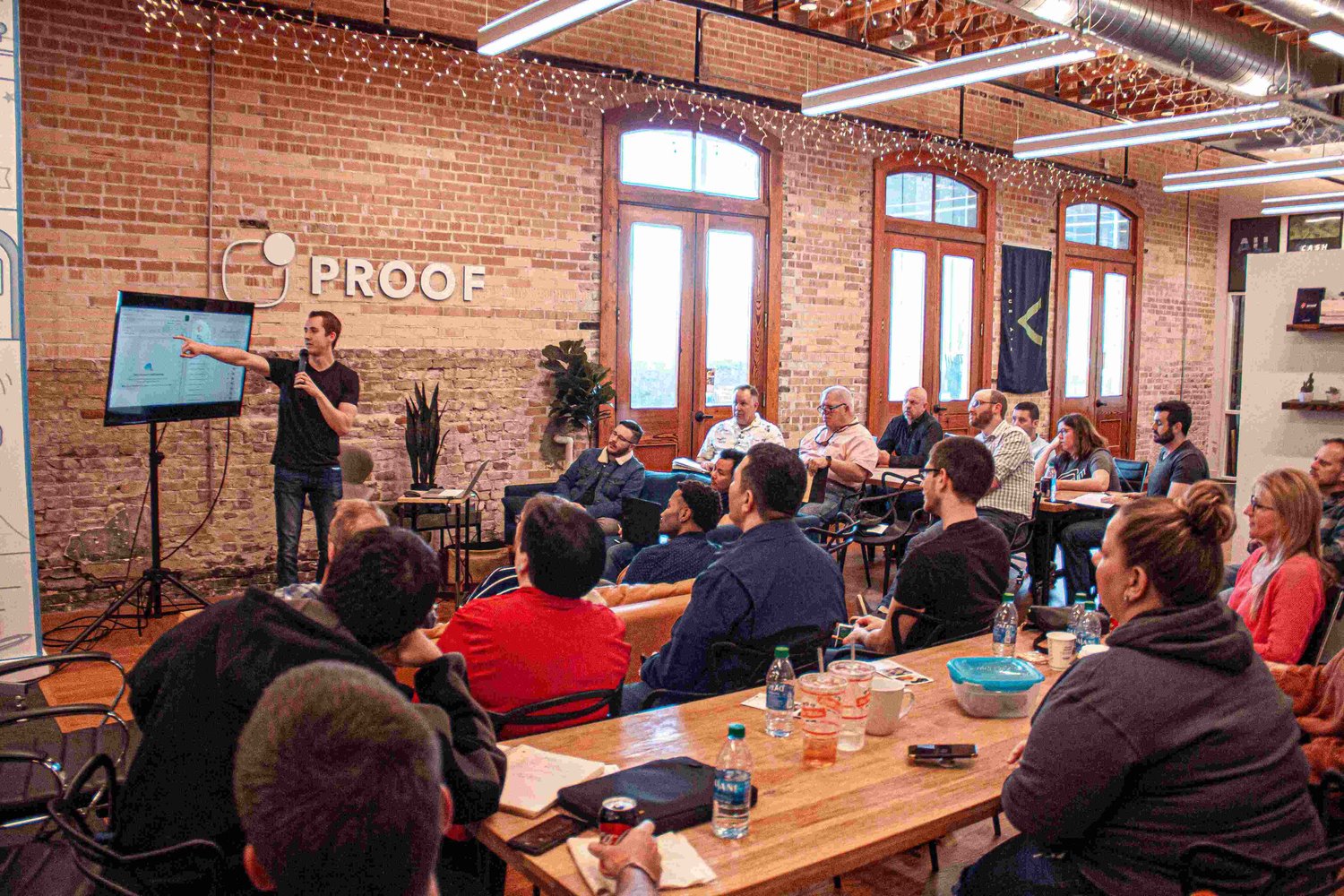
How to Roll Out Your Core Values to Your Entire Company — Faith Driven Entrepreneur


— by Bobby Albert, CEO and President, Values-Driven Culture

I still clearly remember the day we rolled out our Core Values to our employees in October 2005. It was the most significant company-wide event we had ever held.

When people are having fun and their mouths are open with laughter, you can throw in some teaching for personal growth, and the teaching goes down really well. They get it.

Leaders understand that successful meetings result in learning, inspiration and alignment. If you want a successful outcome, you have to plan, prepare and execute when the day arrives.

Here are a couple of ingredients we learned made the day truly significant: 

Set Aside Time 

We blocked out half of a regular workday for our Core Values Day. When employees arrived that morning, they were welcomed with a ticket for door prizes and a pre-printed name-tag that also had their pre-assigned table. 

Set the Mood

We learned that by integrating elements of fun into the event, we were able to create an environment that allowed folks to connect with each other and engage with the message of the event. In our event, we set the mood in the following ways: 

Music: We played upbeat instrumental music at the beginning and during refreshment breaks to help warm people up and to increase a high level of anticipation for the morning.

Games: After people grabbed some breakfast and got coffee or a beverage, we kicked-off and welcomed everyone with an Icebreaker game

Share the Purpose

After people got settled in, I spoke about the purpose of the day and explained that Our Values define how we are to behave as we pursue Our Purpose, Our Vision, and Our Super Objectives.

Share Your Process: I went on to describe the history of the process I went through to discover “Who I was” and Our Values.

Share Your Personal Story: Throughout the event I was very transparent, and people heard stories about me that some had never heard before. I told stories going all the way back to when I was a little boy.

Create Anticipation: Even though I shared the purpose of the day and the history of the process, I still did not reveal Our Values yet.

Allow People to Discover Your Values  

I wanted our people to discover Our Values to stimulate their thinking about the content. I found that a great way to do this is through a game and question format. 

Each table competed to discover each value by playing the Wheel of Values game. The table that yelled out the correct value phrase first got to go and spin a game wheel for prizes.

Then I shared the meaning of that value, where it came from, and why it was important to me.

Afterwards, each table went to a flip chart to discuss and record how we, as a company, were going to “live out” that value.

We wrapped-up each value with each table reporting back what they discussed.

The process was repeated one value at a time until every value was discovered.

Distribute Ownership

I’ve learned that when I place others in leadership positions, they dig deeper, grow more and produce better results than if I tried to do all the “leading” myself. When we finished the discovery process of Our Values, I did two things:

Give Each Person a Value: To reinforce the company-wide message we distributed t-shirts with the letters G.I.V.E.R.S. Each letter stood for a key word that composed our values. Distributing the values in this way, gave each person an easy to remember the key words 

Appoint Leaders: I appointed Value Leaders, who took ownership of each value and were able to do a deeper dive into how we, as a company, were going to “live out” that value.

Clarify Outcomes

Near the end, we had two more discussion questions addressed at the flip charts followed by reporting from each table. The two questions were:

As an organization, if we fail to align our behaviors/activities with Our Values, what would the outcomes be?

If we succeed at aligning our behaviors/activities with Our Values, what would the outcomes be?

Reinforce the Values 

Reinforcing your values is just as important as communicating it. In closing, we showed a video of pictures of just about every employee from previous company events. Seeing each person on the screen emphasized Our Value Statement: People, People, People.

Additionally, I created a ‘Our Values’ plaque and placed it in our office foyer, so that we could have a physical reminder of the values we had discussed together. 

Personalize the Values

We wrapped-up Values Day with the Personal Action Plans. 

We asked each individual employee to take the time to fill out a handout that asked them what action steps they could take to to align their life with Our Values.

Then each employee placed their Plans inside a sealed self-addressed envelope to themselves.

At the end of the year, we mailed the envelopes to the employees, so that as they considered their New Years resolutions they could be reminded of their Personal Action Plans.

Click here to download a sample of our GIVERS Core Values Personal Action Plan. Feel free to use it as a template for your own Core Values roll out!

Celebrate the Values

Our Values Day ended with a catered celebration lunch. The room was filled with laughter and conversation about people’s lives, the business AND our newly announced Core Values.

As leaders, we’re often focused on results and anxious to “check off” a task or event and get on with our business. Take time to celebrate big wins or important events. Celebration helps keep everyone energized and passionate about all aspects of the business.

As you can see, it takes a lot of planning and preparation to effectively roll out your Core Values to your team. But if it’s so important to your success, it is worth all the effort!


Source link

The Four Characteristics of a Successful Social Enterprise — Faith Driven Entrepreneur


— by Scott Boyer

After more than 28 years in Big Pharma working for the likes of Abbott and Bristol-Myers Squibb, Scott Boyer felt God leading him to launch a new kind of business – a Pharmaceutical Social Enterprise®. Scott is the founder and president of OWP Pharmaceuticals and the board chair of ROW Global Health, which together form a hybrid social enterprise that is transforming the lives of people with epilepsy and associated psychiatric disorders in over 35 under-resourced countries. The blueprint for this unique business model is outlined in the new book, “Powering Social Enterprise with Profit and Purpose: The Tandem Hybrid” (Routledge Publishing).

I had been hearing the “whisper” for years but hadn’t yet responded. It was 2014, and after a long career in the pharmaceutical industry, I found myself at the Halftime Institute in Dallas, trying to discern God’s calling for the “latter half.” I had a clear vision of what I should do but hadn’t had the courage to walk in faith that God would provide what was needed to make it happen. With the encouragement of like-minded peers and mentors at Halftime, I decided to take the leap and start a new enterprise, one God had been nudging me toward for years. 

Later in 2014, I launched OWP Pharmaceuticals and the ROW Foundation to address the lack of access to life-changing treatments in under-resourced countries. It’s a model that has now produced over $22 million for medication, diagnosis, and training in low- and middle-income countries, including grants for over 170,000 prescription-months of medication for the poorest of the poor. I’ve learned a lot through both failure and success over the last decade. For a mission-driven venture like this to thrive, I think there are four essential characteristics. It needs to be:

·      Driven by a compelling social mission

·      Financed by commercial success

·      Structured to retain control

·      Scalable and sustainable for the long haul

A Successful Social Enterprise is Driven by a Compelling Social Mission 

Later in my Big Pharma career, I noticed something that piqued my interest while doing market analysis. On the pie charts, the most common markets were the U.S., Japan, the wealthier countries in Europe, and sometimes China and India. The other 180 countries would be lumped together in the last column, always the smallest, titled ROW—“Rest of World.” Companies would focus on the major markets where profits were the greatest, and the rest of the under-resourced world would be neglected. It made business sense, but it became harder for me to rationalize that most disorders and diseases that could be easily treated by available and even inexpensive generic medications went untreated. The cost to human life and human potential in these situations seemed staggering and inexcusable.

I wanted to find a way to do something about “ROW”; to find a way to equalize the graph when it came to medical care. This stirred my sense of justice from a medical and pharmaceutical perspective. It says a lot about us as humans if we’ve developed cures and treatments for diseases but consciously or unconsciously choose not to deliver them to all those in need. Futures could be radically changed by a pill that costs a nickel or a dime. My background uniquely prepared me to start two social enterprises: OWP Pharmaceuticals and the ROW Foundation. We envision a world where all people receive the best level of medical and pharmaceutical care regardless of who they are or where they live – this is our mission.

A Successful Social Enterprise is Financed by Commercial Success 

The old axiom is still true: If there’s no money, there’s no mission. I knew that to accomplish our mission at the scale of the problem, we needed to harness the financial muscle of business. Without the business “flywheel,” we wouldn’t be able to close the global treatment gap. But where to begin?

We determined our target would be epilepsy and (later) associated psychiatric disorders. Over 65 million people in the world suffer from epilepsy, a neurological condition known for causing seizures. In many low- and middle-income countries (LMICs), a lack of understanding of seizures – the belief that they are contagious, or worse, caused by demon-possession – keep people from education, employment, and even marriage. Eighty percent of people with epilepsy live in LMICs, and the vast majority go untreated. Seventy percent of people with epilepsy can have their lives completely transformed with proper diagnosis and medication. The potential for life change was huge.

From a business perspective, one report estimated the U.S. market for epilepsy drugs at $1.3 billion in 2020, with the worldwide market reaching $5.8 billion by 2027. We entered the market with our antiseizure drugs Roweepra® (levetiracetam) and Subvenite® (lamotrigine), with the goal of running a profitable business in the U.S. and funneling profit to ROW to fuel our mission around the world. We continue to innovate our social enterprise to compete in the U.S. market, and our development pipeline has six oral liquid drugs widely used in neuroscience, several with patents already issued. The success of the business means success for the mission.
 

A Successful Social Enterprise is Structured to Retain Control 

If you want to keep control of your mission, you need to think about structure from the beginning. Your angel investors will push you to venture capitalists (VCs), and your VCs will push you to private equity, who will push you to venture debt, who will push you to structured debt. At each step, you give up more control to people who are likely not driven by the same goal. These are normal business transitions when it comes to capital, but they’re not necessarily positive for mission-driven enterprises. 

To retain control in a private company, a founder must retain at least 51% of the equity or voting stock, either personally or in an organization. You need a plan to protect the mission (and founder) from being forced out or bought out. Our tandem hybrid model – which utilizes both for-profit and non-profit entities – guards against these outcomes. My co-founder Bruce Duncan worked with our attorneys to (eventually) come up with an elegant solution that allows ROW guaranteed funding while OWP controls the business assets. To achieve this outcome, we formed an IP Holding Company (LLC) – owned jointly by OWP and ROW – which contains all OWP patents and other intellectual property. OWP pays licensing fees and royalties on product sales to the Holding Company, which automatically funds ROW at its percentage of ownership. We’ve structured this model so that approximately 50% of OWP’s profits can go to ROW – an unheard-of percentage of corporate giving. While there are other structural options that can produce similar outcomes (see Patagonia’s recent restructuring as an example), the goal is to find a way that locks in your mission for perpetuity.
 

A Successful Social Enterprise is Scalable and Sustainable for the Long Haul 

In his TED talk, “The Case for Letting Business Solve Social Problems,” Michael Porter from Harvard says:

“What’s the fundamental problem we have in dealing with these social problems? If we cut all the complexity away, we have the problem of scale…Why is that? Because we don’t have the resources…So, if it’s fundamentally a resource problem, where are the resources in society? I think the answer is very clear: They’re in business.”

Our tandem hybrid model leverages business; as OWP’s profits increase, ROW’s global impact increases. While many non-profits struggle with inconsistent revenue streams and difficult decisions about investing in “overhead,” our model bypasses those challenges. We’ve already built the pharmaceutical infrastructure that will allow continued growth. And as OWP grows, so grows ROW. While ROW Foundation (a private foundation) benefits from the profits of OWP, we don’t want to limit the scope or scale of resources we can put toward the mission. So in 2021, we launched ROW Global Health, a public charity, to attract philanthropic dollars from individuals, donor-advised funds, and foundations to diversify our funding sources and add more fuel to the engine. 

Sustainability and scalability are especially important to the work we’re doing globally in epilepsy. We can’t start a treatment plan and then tell patients we’ve run out of money and therefore run out of medication. We need a sustainable way to help educate, diagnose, and treat people for the long run. A consistent revenue stream provides a sustainable solution, and the future growth potential of the business allows for a scalable solution. Yet the impact is measured by each individual life transformed; each child of God whose human potential is unleashed. 

While we’ve come a long way in the last nine years, in some ways, we’re just getting started. We’re developing new products, building new partnerships, and structuring our model so that we continue to serve “the least of these” long after I’m gone. 

What “whisper” have you been hearing? How might God be leading you to respond? It could be that the rest of the world is waiting for you to take the first step. 

This article includes excerpts from the new book “Powering Social Enterprise with Profit and Purpose: The Tandem Hybrid” (Routledge).


Source link

Be A Different Type of Entrepreneur! — Faith Driven Entrepreneur


— by Austin Samuelson

We are playing a different game. Different is good.

In third grade, I wanted a trampoline really bad, but I had a problem – my parents wanted me to help pay for it. I had made a whopping $2 a week doing chores around the house, but as every great entrepreneur does, I thought there has to be a better way. If I wanted a trampoline before I turned 83, I needed a new solution. So, I started my “first business” selling homemade stress balloons. Before third grade was over, I was jumping higher than the biggest bullfrog in the pond. This trend continued in high school. If I wanted a truck with a solid floorboard, paint that wasn’t rusted, and AC, then I needed to earn money, and that is what I did. Owning a business has always been the career path I knew I wanted to take. 

As I’m sure you all know, the path looked different, but different is good. 

Twelve years ago, my wife and I were blown away to find out (at that time) 18,000 kids die each day from starvation and malnutrition. We were saddened and sickened by this stat but at the same time, confused. 

What can we do, how can we help? 

I knew I was called to the business world and that God created me to run a business, but how do we do that and fight hunger? God has a funny way of answering these questions. He called us to open a restaurant that donates a meal for every meal we sell, Meal 4 Meal. The ironic thing is (and a total God move) he called us to do this even though we had never worked in a restaurant a day in our life. 

As we have embarked on this faith journey of serving God by running a for-profit business, we have had to get very comfortable with being different. 

Hey Entrepreneurs, Be Different! 

I have a great group of friends who own and run restaurants. These guys are awesome, and although we sometimes compete, we all care about each other and truly want the best for each other’s restaurants. When I first met these guys, I often felt very underqualified. These guys grew up in the industry. In fact, several are second-generation restauranteurs. I, on the other hand, am a complete outsider. 

The first day we opened our first restaurant was day one for me in this industry. I have learned so much from them, but one of the things I had to learn the hard way is to not be like them. 

This isn’t because they are not great guys – they are – they run restaurants I would be glad to have my boys work at. They have been extremely successful. So, why should I not be like them? 

God had to gently remind me that I’m playing a different game. 

Do I enjoy their friendship? Yes. Do I learn something new every time I talk to them? Yes. Has Tacos 4 Life gotten better because of these friends? 100%. But I’m not playing the same game. The beauty of God speaking this to me is that I can learn and let the insecurities fall away. 

In a mission-focused business, we have to look at business peers and ministry peers and learn from each, but we do not fit either category. We have a clear and strong mission to feed kids while running profitable restaurants. Both are equally important. One cannot outweigh the other. If we only look at our business peers, we will tend to lean in that direction. If we only look at our ministry partners, we will tend to lean in that direction. Instead, we have to hold both as equally important. 

We have to be ok being in the middle and listening to God’s direction. 

Be different!

How Do We Become Different? Embrace Your Calling

The first time I went to Africa, I had a friend speak into my life in a way that forever changed me. We went to Africa to see the food that has been raised from donations at our restaurants in action. We partner with an incredible Christ-centered organization, Feed My Starving Children. We had been in business for two years at this point with our first restaurant, and you would have thought I would have been so excited to go on a once-in-a-lifetime trip to Africa, but I didn’t want to go. 

No, I was tired, burnt out, and a little angry with God. Ashton and I had done this radical thing of opening a mission-based restaurant, and it was failing, and I was being a sore loser. 

I went on this trip, and I guess my anger was evident to the others on the trip. During one of our long van rides across the beautiful countryside, a friend leaned over to me and told me to read Romans 4 in the Message version. He then pointed out what Paul said about Abraham, the Father of our faith. Eugene Peterson does such a beautiful job helping us see how significant this chapter is. Paul shares that Abraham was first named a father and then became a father. He trusted God to do what only he could do. 

I love that God called Abraham a father long before he became a father. Isn’t that just like God? It’s not just Abraham, it’s David, Joseph, Gideon, and on and on and on. I love what Dallas Willard says, “The most important thing in your life is not what you do. It is who you become.” So stop focusing on your own inabilities and focus on God. He’s the one who has created you, named you, and is growing you into who you are becoming.  

Being Different in Business Means Winning Different

I grew up in Arkansas, and being in the land of Walmart, I grew up hearing stories about these wise old sages who sold cattle, cashed in retirement funds, or just simply went all in to buy Walmart stock. My parents have a neighbor, and he was one of these wise guys. Apparently, he sold a trailer load of cattle back in the late seventies and used his earnings to buy Walmart stock. Brilliant! I think we all want to be that person. 

So, what is the next great stock pick from the perspective of a faith driven entrepreneur? Let’s take a look at the greatest return for us as Christ followers and entrepreneurs. 

Jesus talks to us in the Sermon on the Mount about storing treasures in heaven, but what does that mean? I would argue that we could trace back to Proverbs 19:17: “Mercy to the needy is a loan to God, and God pays those loans back in full.” 

Wow, why don’t we talk about that more? I certainly don’t hear about this, and if I do, it’s often related to blessings now on this side of eternity. Maybe that is when the loan is paid back, or maybe it’s in eternity, but think about how we invest in businesses. We bet on leaders and strategies, so why not put our investments with the creator of the universe? Jesus so winsomely invites us into this. I guarantee you this will be better than selling cows to buy Walmart stock 50 years ago. 

You Have What It Takes to Be a Different Entrepreneur. Let’s Realize This Eternal Return. 

Why does all of this matter? We are created in God’s image. As entrepreneurs, we have the creativity within us that the creator of the universe possesses. We are uniquely gifted and called to serve him and build the kingdom through business, but we have to stop playing the same game as everyone else. 

Stop comparing yourself to traditional businesses. Remember, it’s not what you have done; it’s who you are becoming. Go for an out-of-this-world return. Jesus invites us into a counterintuitive way of being. Take the invite, and stop playing the safe, normal game everyone else is playing.


Source link

Leadership Insight from UMB Bank and the 2008 Financial Crisis — Faith Driven Entrepreneur


— by Peter de Silva

A Personal Journey to Understanding Everlasting 

As a young boy, I cherished my faith. My faith gave me the strength to power through adversity of all kinds, including my life-long struggle with a chronic disease called Charcot-Marie-Tooth disease (CMT). As my body lost muscle and sensation, my faith assured me that my life had meaning and purpose. While I could not fully comprehend it, I was confident that I was here intentionally, not by some random accident. 

As a noted business and community leader, husband, father, uncle, and brother, I have always tried to set a good example by being a strong moral and ethical leader. During my 35-year career, I chose to lead by principles, not rules. 

This leadership perspective helped me lead UMB Bank through the 2008 financial crisis.

UMB Bank: A Lesson in Leadership

In the early 2000’s, I was Chairman and CEO of UMB Bank, a strong midwestern bank headquartered in Kansas City, Missouri. This nearly 100-year-old institution was led by a set of long-held beliefs about doing what was right, not what was popular now. 

We believed that just because you can do something doesn’t mean you should. 

While others were making risky subprime loans, we rowed close to shore safely in the sight of land by adhering to time-tested safety and soundness principles. While others thought that maybe we had lost our way in a brave new world, we thought differently.

When the 2008 financial crisis came crashing down, our institution was a beacon of strength against a backdrop of weakness caused by greed, expediency, and unrealistic performance expectations. While others scoffed and said we couldn’t adapt to change, we followed sound principles for embracing change, which sometimes means standing firm and sticking to your guns. We relied on the principle of doing what was right versus what was expedient and popular, and it paid off.

2008: A Crisis of Leadership 

The entire crisis was a very troubling time for me as a leader, and I thought long and hard about its origins and causes. Ultimately, I concluded that the 2008 financial crisis was principally a crisis of leadership. 

You can find hundreds of good definitions of leadership in books and online. Most say that a leader is someone who has authority, influence, and the ability to communicate, persuade, and influence others. Other characteristics often include the ability to articulate a vision, or the ability to successfully work through others to achieve a stated objective. While I find these characteristics instructive (most leaders should possess these traits), I don’t believe they get at the heart of true leadership. 

A Biblical Perspective on Love-Driven Leadership 

At my wedding over 30 years ago, like at so many others, one of our bible readings was from the First Letter of Paul to the Corinthians verse 13, 4-8. Chances are you have heard it before.

Love is Patient; love is kind; love is not envious or boastful or arrogant or rude. It does not insist on its own way; it is not irritable or resentful; it does not rejoice in wrongdoing but rejoices in the truth. It bears all things, believes all things, hopes all things, endures all things. Love never ends. 

In his letter, Paul is speaking about how the unbreakable bond of love can unite two people together. The passage speaks about respect, honor, integrity, trust, perseverance, and how to care for one another. 

I got to wondering about whether love might be a key component of leadership, or maybe the key leadership component. After all, love is not leadership, and leadership is not love. Or are they inextricably linked? I was not sure, but I thought that just maybe I might be onto something. 

I decided to substitute the word “leadership” everywhere that Paul had the words “love” or “it” in his letter. Here is how the passage reads with those alterations.

Leadership is Patient; leadership is kind; leadership is not envious or boastful or arrogant or rude. Leadership does not insist on its own way; Leadership is not irritable or resentful; Leadership does not rejoice in wrongdoing but rejoices in the truth. Leadership bears all things, believes all things, hopes all things, endures all things. Leadership never ends.

I remember the first time I read this revised version like it was yesterday. I sat in stunned silence for almost an hour reading the passage repeatedly trying desperately to find fault with it, but I couldn’t. I had finally found a definition of leadership that spoke directly to me. 

While this leadership definition may not speak to everyone, it spoke to me. This was not because the definition has Christian origins. In my view, this definition transcends religion. It has universal application in today’s complex and multi-faceted world, yet the concepts and the words are drawn from millennia of experience. It is about a form of leadership style that I am completely comfortable with. 

Loving Leadership and the Example of UMB Bank

Love is a principle that can guide your decisions as an entrepreneur or executive. It’s certainly not a rule or a black-and-white rubric dictating your every move. Instead, love is a touchstone that we return to in difficult times, and it helps us weigh our motives and the consequences of our decision.

Is this business decision loving toward our customers and our staff? 

In the example of UMB Bank, reducing risk and refusing to chase speculative gain was a choice rooted in love. Our customers did not have to worry about what might happen with their deposits. Our team didn’t have to worry about the bank going under and losing their jobs. Before the 2008 financial crisis, this wasn’t a popular or attractive leadership decision. But over the long run, it was the right decision.

Be Inspired to Lead with Love

Here is one last thing I’ve learned about leading with love. Leading with love is both aspirational and inspirational. 

I recognize that I fall short of this definition daily. There have been times when I might have knowingly or unknowingly been arrogant or rude. There were certainly times when my patience wore thin as I tried to accomplish an important task. At other times in my career, I might have taken pleasure in someone coming up short so that I could advance more quickly. 

I began to feel as if this definition was unattainable, unrealistic. However, I soon recognized that it was okay to fall short. The attainment of this leadership path would be a never-ending pursuit. An ongoing and continuous driver of reflection and self-improvement. This realization might have led to my discouragement, but instead it inspired me to grow as a leader and Christian. 

My fondest wish is that you draw inspiration from this passage as I do. Whether you are called to be a serial entrepreneur, a C-suite leader, or occupy a leadership role more like that of Mother Theresa, all who proclaim to be leaders can draw strength, perspective, and wisdom from this passage.

Won’t you join me in the quest to fulfill this everlasting definition of leadership? 

About the Author

Peter de Silva is an executive leader, former Harvard University senior fellow, and the author of Taking Stock.


Source link

God, Bless My Business! — Faith Driven Entrepreneur


— by Bruce “Captain” Kirk

In the fall of 2022, I facilitated my first Foundation Group with Faith Driven Entrepreneur. When recruiting participants, my desire was to attract entrepreneurs who were seeking to build their faith into their businesses and journey with established entrepreneurs who wanted God to bless their businesses.

To me, this made total sense. After all, what Christian entrepreneur wouldn’t seek the favor of God upon their business?

While facilitating the Foundation Group, however, I increasingly found myself asking, “Am I trying to convince God to bless my business? Or am I asking God to lead and direct the business He had provided?” The hard reality is that I was predominantly asking God to bless the business plans I had established and thinking that was enough.

Through this self-reflective process, I experienced a paradigm shift/awakening that transformed my concept of the Faith Driven Entrepreneur. This awakening has clearly led me on a new path filled with excitement and anticipation. For me, it’s a better way, and I am eager to share this article with you in hopes you too can experience an awakening that leads you and your business to new heights in God’s eyes.

Can We Expect Blessing Without Self Examination and Change?

When politicians give speeches, typically, they end with “God Bless America” (as if this was part of a ‘politician’s playbook’). This frustrates me not because I don’t want God to Bless America… I passionately do, but because politicians seem to think God will Bless America simply for the asking, without any fundamental change in what’s happening in our nation culturally. 

In large part, God has been removed from the public square, moral fiber, and policy decisions of our nation. He has also taken a backseat within families, schools, media, and entertainment. Given what we read in the Bible, I believe God cannot ignore this context. Doing so would be opposite of His character. 

God of the Bible, in His holiness and perfection, is incapable of acting out of character. (As proof, the Old Testament is replete with accounts of Him removing His blessings from those who ignore Him and choose to go their own way.)

But, in many ways, by expecting God to respond to my requests to bless my business (without any real change), wasn’t I acting in a similar fashion to the politicians? 

Sometimes Blessing Begins with Surrender

Also during the Fall of 2022, I was part of a Bible Fellowship focused on the video series “Experiencing God” by Henry Blackaby.

During these two formative events, the Faith Driven Foundation Group and “Experiencing God,” I recognized the need – and calling – to increasingly turn my business over to the Lord and run it in ways that brought Him blessings and glory rather than asking Him to bless what I wanted and what I was doing.

A Charles Stanley quote speaks into this context very well, “Obey God and leave all the consequences to Him.”

Romans 12:1-2 also sets the table for implementing this newly found perspective, “I beseech you therefore, brethren, by the mercies of God, that you present your bodies a living sacrifice, holy, acceptable to God, which is your reasonable service. And do not be conformed to this world, but be transformed by the renewing of your mind, that you may prove what is that good and acceptable and perfect will of God.”

I meet so many people – both secular and faith driven – who struggle to know the purpose for which they exist. The answer is right there in Romans 12:1-2. God wants to know you are committed to obedience (v1), and then allow Him to open your heart, mind, and eyes to the specific and unique purpose He has for your life (v2).

For What Purpose Does Your Business Exist?

Just as you may wonder for what purpose you exist, I submit asking the same question about your business is equally valid. If your business’ purpose isn’t aligned with God’s will or God’s way, then you might not experience the blessings you’re asking for.

The key is unconditional surrender. First in your heart. Then in your life, personally and professionally.

Imagine the wonderful ripple effects if you were to present your business as a living sacrifice to God.

Imagine if running your business was a form of worship… a sweet aroma to Him for how He has equipped you.

Imagine learning the good, acceptable, and perfect will of God for your business!

If you are struggling with letting go of control of your business, meditate on these verses and quotes. Remember how God wants to bless us and change us to be more like Christ. Not every obstacle is a result of control or a lack of faith, but perhaps the Holy Spirit is asking you to reflect on your heart posture.

Jeremiah 29:11, “For I know the thoughts that I think toward you, says the Lord, thoughts of peace and not of evil, to give you a future and a hope.”

Remember, when we say, “God, bless my business!” we might be reversing the true order of things. We are created to serve God. God is not here to merely serve us (although his blessings go beyond anything we can imagine).

God Has a Plan For Your Business

The awakening I experienced was, in part, recognizing that I was a steward of the business God had provided and not the owner… with all the width and depth that means (FDE Foundation Video 2). The awakening was also experienced in the business context of Luke 9:23, “Then He said to them all, “If anyone desires to come after Me, let him deny himself, and take up his cross daily, and follow Me.”

If you are sick of the status quo of asking God to bless your business and still feeling not having peace, I encourage you to invoke Romans 12:1-2 and Luke 9:23 in your life. Ultimately, what you experience and the answers to what God has planned for you and your business are personal. They are between you and God. However, I can assure you, the Holy Spirit will create a paradigm-shifting, awakening experience meant specifically and personally for you when you surrender to Him unconditionally.

It’s a journey, a lifestyle, not an on/off switch. Focusing on God’s plans will most certainly involve degrees of repentance and reconciliation, perhaps even changes in the direction and makeup of your business. Yet, the glory God receives and the fulfillment you will experience living the life God designed you for is priceless.

Go and live this wonderful life of your business being aligned with God of the Bible, God of the universe!

5 Practical Tips for Surrendering Your Business to God

It’s one thing to read a new perspective on God blessing your business. But it’s another thing entirely to put it into practice. Here are some practical tips that can foster an environment where the Holy Spirit honors your efforts. Each one is an important ingredient, but don’t feel you need to add them all at once. Start with a few, build consistency with them, then add more as you go. But keep going.

Take a personal inventory of what God may have already called you to do, but that you are avoiding or haven’t done. (You cannot expect God to give you added guidance and further clarity if you aren’t living in obedience to that which has already called you.)

Quiet yourself, pray, pray, and fast. Taking a step back and giving yourself the freedom to think, ponder, and be infused by the vision of the Holy Spirit. Walks in nature, periodic times away are Biblical (Mark 1:35, John 6:15).

Read Scripture to understand the accounts of our Biblical forefathers and how they surrendered. For example:

Noah’s obedience to God’s calling and receiving the blessings of God (Genesis 6:14,22; 7:5; 9:1)

Abraham’s obedience to God commanding Him to present Isaac as a sacrifice (Genesis 22:1).

Nehemiah puts his career on hold and dedicates himself to the rebuilding of Jerusalem’s walls. He goes all-in with full, pedal-to-the-metal commitment upon receiving the green light from God through King Artaxerxes. It’s as if Nehemiah was released to the purpose for which he was born.  (Nehemiah 1:3-11; 2:17-18).

Shadrach, Meshach, and Abed-Nego commit themselves to obeying the Lord no matter what and are protected (Daniel 3:28). Did they know ahead of time the blessings they’d receive and the ripple effects that would take place through King Nebuchadnezzar as a result of their obedience? No. They wholeheartedly trusted in the Lord God.

Seek awareness of where God is already working in the marketplace and join Him in that work. John 15:5, “I am the vine, you are the branches. He who abides in Me, and I in Him, bears much fruit; for without Me, you can do nothing.”

Seek fellowship with other Faith Driven Entrepreneurs who are devoted to helping you to discern the voice of God, providing encouragement, and holding you accountable to this journey.

I will end with Romans 15:13, “Now may the God of hope fill you with all joy and peace in believing, that you may abound in hope by the power of the Holy Spirit.”


Source link

A Biblical Strategy for Leadership — Faith Driven Entrepreneur


— by Bob Tiede

When Jesus was 12 years old: “After three days they (his parents, Joseph and Mary) found him in the temple courts, sitting among the teachers, listening to them and asking them questions.” — Luke 2:46. 

There is a communication crisis wreaking havoc on corporate America. 

The Society for Human Resource Management reports that miscommunication costs companies about $420,000 per year. In our offices, at home, and in our relationships, our communication determines what gets done and how well it gets done. Where, then does our communication go awry?

A good place to start is with our questions (or lack of). When a leader becomes so task-oriented and result-driven that he or she neglects a teammate’s ideas and honest feedback, the leader does a disservice to organizational growth. An inability or refusal to ask questions leads to stagnation, siloing, and a lack of competitiveness. It also ignores an important biblical leadership principle.

That’s right, leading with questions is a biblical leadership principle.

Through years of studying the Gospel and Jesus’ ministry, many leaders in business have deduced that Jesus, himself, is the most critical example of excellent leadership and communication. During his ministry, Jesus invested time in teaching and training his followers, and empowered them to carry on his mission after he was gone.

How did he do this? One of his most effective strategies was leading with questions. 

We can apply this leadership strategy to our own lives by studying Jesus’ ability to find meaning through the art of asking questions. Throughout the Gospels, we find numerous instances where Jesus asked questions to his disciples, religious leaders, and individuals seeking his help. Depending on the situation, Jesus was able to lead others to key realizations and incredible transformations.

Leading with Questions Can lead to Understanding and Unity 

This may seem obvious, but asking thoughtful questions is an essential way of gaining knowledge and understanding. In the Bible, we see that Jesus often asked questions to help his disciples and followers understand his teachings. In Matthew 16:13-16, Jesus asks his disciples, “Who do people say that the Son of Man is?” He follows up with another question, “But who do you say that I am?” Through these questions, Jesus helps his disciples understand his identity and unified mission.

Similarly, in John 3:1-15, Jesus engages Nicodemus in a conversation where he asks him several questions to help him understand the concept of being born again. By asking questions, Jesus helps Nicodemus understand the spiritual truth that he is trying to convey.

It’s an organizational leader’s job to spur a sense of unity and collaboration. Simultaneously, leaders are responsible for streamlining efforts, and ensuring there’s a general understanding of the “what” and the “why”.  Jesus’ ultimate example of using questions to ignite aligned perception and team harmony can and should be translated into our leadership habits. 

Leading with Questions Reveals Heart

Jesus’ questions oftentimes provoked people to think critically about their actions, and at other times, they were used to draw his team back to the mission. 

In John 21:15-17, after Jesus’ resurrection, he asks Peter three times, “Do you love me?” Jesus’ repeated question is not only a way to confirm Peter’s love for him but also to restore Peter after he had denied him three times. This line of questioning brought Peter back to the truths of his own heart, his own thoughts, and his own experiences. Jesus brought out of Peter what was true, and what was relevant – bringing him back to the mission. 

When leaders ask good questions, they encourage their team members to think more critically about their own work and the problems they are trying to solve. By probing deeper into issues and asking thoughtful questions, leaders can help their team members uncover underlying assumptions and unspoken doubts that identify potential blind spots.

Leading with Questions Can Ignite Discussion and Foster Relationships 

In Jesus’ day, the Jews hated the Samaritans. Those living in northern Israel would take the long route to Jerusalem, simply to avoid going through Samaria. So when Jesus asks ”Which of these three do you think was a neighbor to the man who fell into the hands of robbers?” 

The expert in the law replied, “The one who had mercy on him.” in Luke 10:36–37, there was most likely a long pause before the Jewish expert in the law replied, and almost certainly it was very difficult for him to verbalize that the hero of this story was a Samaritan when he hated all Samaritans. 

Jesus could have told this story and ended by stating, “Therefore, the Samaritan was the good neighbor,” but instead he brilliantly asked the expert in the law to answer; knowing how potentially powerful answering that question might be in his life and the lives of the others present.

In our modern office, it’s not uncommon for conflict to arise. Sometimes sparked by clashing personalities or the competitive corporate ladder, office culture can be divisive and often lack truth. A good leader seeks to unite and pose questions that solicit truth and revelation. A strong leader is willing to address issues head-on rather than allowing them to fester and grow. Ultimately, the model of leading with questions calls for leaders to demonstrate their commitment to creating a culture of respect and accountability within the workplace.

To Summarize: Leading With Questions is Leading With Faith

Using strategic question-asking as a leadership framework is rooted in biblical principles. Not only does this method require biblical characteristics like trust, humility, and a willingness to listen and learn from others, but it’s also the pathway to establishing harmony in the office. 

By leading with questions, we can represent the way of Jesus in everyday life and create a culture of curiosity, respect, and continuous improvement within our organizations.


Source link

3 Biblical Principles for Embracing Change — Faith Driven Entrepreneur


— Originally published by Dan Anderson

“3 Biblical Ways to Move from Change Loather to Change Lover.”

It’s no different with leaders or organizations.

When they stop growing or changing, they start dying. Or, at the very least they become less effective or productive.

I did an idiotic thing once. (It was the only time, mind you, but it was a doozy!)  Getting fed up with the weeds that kept popping up in my mulch around the gorgeous cottonwood my wife and I planted in our front yard, I doused them with weed killer.

My methodology was extremely effective in killing the weeds. But, as you might have guessed, it also did in my tree. Gone were its lush green leaves.  Gone was its shade.  Gone were the bragging rights we had with our neighbors, since it was the tallest and most beautiful tree in a four block radius.  My tree died a quick death.

Using a dead tree metaphor might be overstating it bit, but the lack of growth and the loss we will experience in our lives, our leadership, and our organizations is real if we resist change or innovation instead of embrace it.

In one way or another, all of us have change aversion, especially when things seem to be going well. Even those who would consider themselves to be change-aholics have their limits. Here’s the thing.  We are not going to change change.  It is as consistent as the seconds ticking away on a timex. It will be a pressing constant until Jesus comes. Then talk about change!

So, how can we move from being a change loather to becoming a change lover? Here are three actions that have helped me as a faith-driven entrepreneur.

1. Date the Method

“Why do you cut off the ends of a roast before cooking it?” a husband asked his wife. “Because my mother did it that way,” she responded with a smile. The husband being the curious type had to get to the bottom of this dilemma. So he called his wife’s mother and asked the same question.

Receiving an identical answer, he proceeded to call his wife’s grandmother.  Upon hearing the question, she laughed and said, “I don’t know why they cut off the ends of the roast, but I did it that way because a full roast wouldn’t fit into my pan.” (*adapted from Ken Boa’s Handbook to Leadership, Trinity House Publishers, 2007)

This story illustrates how some methods or strategies we may borrow from current cultural trends to start up new ventures, create new products, goods and services, to hit our KPI’s, or to maintain compelling work cultures may be the perfect method to fulfill the mission at that moment. But over time—especially with how fast our culture is continually changing today—they become the proverbial roast with the ends cut off.

The wise lead-follower of Christ will know when the appropriate “cutting” or “pruning” is needed. Or when a new “S-Curve” needs to be established in order to become “more fruitful” and thus proving him/herself as an entrepreneur disciple of Jesus and bringing greater glory to Him (John 15:8). 

2. Marry the Mission

I once heard Pastor Andy Stanley charge, “Marry the mission, date the model.” His point was that people resist change when they’ve lost sight of their mission because the model (or method) has become more important.

I have found this to be true in my own entrepreneurial ventures and leadership. When I feel overwhelmed by the enormity of challenges and changes going on, I find renewed vision, motivation, and endurance to tackle them by rediscovering my mission, or my “Why” (as Simon Sinek mentions in an intriguing and well known Ted Talk).

Here are some of my Whys that drive me in relation to my work with Kingdom Way Ministries, FCCI & Five Capitals Coaching

Person – I long to be Christ’s ambassador—His salt and light leading others to find eternal, true life in Jesus, the perfect God-Man (Matt. 5:13-16; 2 Corinthians 5:18-20).

These are some of the Why pathways that God has hard-wired in me that have intersected to become my unique calling. They have sustained me and compelled me to embrace some of most significant changes I’ve ever experienced in my life and leadership.

Knowing and staying married to your personal and/or professional mission—and helping those you lead to do the same—will provide the motivational anchors of stability that you (and they) need to thrive in an environment of change.

3. Mimic the Master

Above all, Jesus provides the greatest pattern and motivation for us to embrace and leverage change. As our Creator He is the One who infused us, and all of creation, with innovation and creativity (Col. 1:15-16).

He has been innovative Himself in the way He has dealt with human beings throughout history. A worldwide flood, the establishment of languages and nations at Babel, the call of Abraham and a nation (Israel) to Himself, the deliverance of that nation from Egypt and the establishment of laws for living through Moses — all serve as dramatic examples of unparalleled changes that have been wrought by God.

These innovative works led to the most remarkable of all:   Jesus. God in the flesh.

The Word became flesh and made his dwelling among us. We have seen His glory, the glory of the One and Only, who came from the Father, full of grace and truth. (John 1:14).

What would motivate the God of the universe to leave the power, the splendor, the pleasures and perfection of His heavenly home? To forever take on humanity as part of His divine being?  To ultimately die a despicable and cruel death on a cross?

All the other methods He had instituted prior to His coming were insufficient to meet our greatest need: the need for forgiveness. So Jesus stayed married to His mission of redemption and willingly paid the painful price of change to cover the debt of our sins.

My dear children, I write this to you so that you will not sin. But if anybody does sin, we have one who speaks to the Father in our defense—Jesus Christ, the Righteous One.  He is the atoning sacrifice for our sins, and not only ours but also for the sins of the whole world. (1 John 2:1-2).

As followers of Christ, and ones called to be imitators of our God as dearly loved children (Eph. 5:1), we owe it to our Savior to follow His masterful example.

Here’s a final thought that might help us all to become more friendly with change.

To change is at the very core of what it means to be a Christian. Through faith in Christ and trust in what He accomplished on our behalf on the cross:

Question:  What principles help you to embrace change better?

Thinking About It: Are there any useless methods in your life and leadership that you need to send a “Dear John,” letter to?

What innovations or changes have you brought to those God has called you to lead?

What changes might God be leading you to make?

What are some of the Whys that will drive you and sustain you as you navigate through these changes?


Source link

A Study on Endurance and Faithfulness — Faith Driven Entrepreneur


— by John Knicely

“The Bible says when we face difficult times and we don’t really know the way forward, the best thing you can do is just stand,” said Darin Kassebaum, co-owner of Cosmos Corporation.

Since the St. Louis, Missouri company started in 1980, Cosmos has faced countless challenges. The producer of natural health, wellness, and care products has faced near bankruptcy and personal tragedy. Darin, his father, and his three brothers who own the company, have leaned on truth from the Bible and faith in Christ to endure. 

“In those moments I recite, I confess scripture,” said Darin. “And I believe that in doing those things and recalling to my mind the promises God has made, it bolsters courage in my soul. And it enables me to stand.”

If you’re a faith driven entrepreneur, you’ve no doubt faced obstacles, too. We sometimes turn to scriptures like Proverbs 3:5,6 (NKJV), where the author says, “Trust in the Lord with all your heart and lean not on your own understanding. In all your ways acknowledge Him and He shall direct your paths.”

That’s a lot easier said than done, however. How do we not lean on our own understanding? It’s all we know in any given situation, even if we are prayerful and diligent.

Supplier Shutdown Leads to Prayer and Petition for the Cosmos Corporation

In the late 1980s, Cosmos Corporation’s lone shampoo supplier shut down abruptly. In the blink of an eye, Cosmos had hundreds of customer orders with no one to fill them. 

“We were in trouble instantly,” said Don Kassebaum, Jr.

The brothers specifically remember Don Sr. praying, “Lord, we commit this decision to you. If you want us to have this, make it happen. If you don’t, shut the door.”

When we offer up a situation for God to direct, we often want Him to come through and save the day. At least in the way we imagine it. We often imagine ourselves standing in front of two doors saying, “God, here is Door #1, and here is Door #2. Door #1 leads to a positive outcome. Door #2 would be less appreciated. I’d be very glad if you chose Door #1.”

In this case, the family tried to purchase the shampoo supplier. That was Door #1. They offered $180K to buy the business. The owner came back and asked for $200K. They couldn’t afford the counteroffer, which meant the situation was quickly leading to a disappointing answer to prayer.

“So it was clearly shutting the door,” said Darin. “And in those moments you just stand. If you go out of business, you go out of business standing. But I have found dozens of times God opens Door #4 in that moment.”

Sometime later, a woman who had been working for the supplier approached the Kassebaums and said she could help them make shampoo. 

“Okay, here’s an open door,” Darin recalled thinking. “Let’s go through this. I’m not certain it’s the right one, but it’s the only door that the Lord hasn’t shut. Let’s go that way. Many times it’s led to an open field of opportunity.”

The supplier agreed to sell some production equipment, and the woman taught the family everything they needed to know. The total cost came out to $1800. 

All of a sudden Cosmos was making shampoo and fulfilling their own orders. It was an unforeseen, pivotal moment that set Cosmos up for breakthroughs in natural shampoo production.

A Story of Hope for Entrepreneurs Waiting for God to Open or Close a Door

Psalm 119:105 (NKJV) says “Your word is a lamp for my feet and a light on my path.”

If you’re like me, you want it to be a floodlight showing everything ahead and around the corner. But that’s not how God works. Not every entrepreneur will receive a resolution like the Cosmos Corporation experienced. In fact, many entrepreneurs will have to close down a business and pick up the pieces. Even when God ultimately moves, it may come after years of prayer, tears, and questioning. 

But by surrendering control and trusting in Him, regardless of the outcome, we grow in intimacy with Christ. And that is the fulfillment our hearts ultimately desire.


Source link

Ten Tenets for Navigating the Workplace — Faith Driven Entrepreneur


As a non-profit ministry we are generously supported by the donations of a few leaders to advance the movement.

Faith Driven Entrepreneur is an educational website hosted by Faith Driven Movements (501c6) and FDM Foundation (501c3) nonprofit corporations whose mission is to inspire, educate, and mobilize people to use their time, talents and other resources in the marketplace. Faith Driven Movements brings together leaders from around the world that seek to make a financial, social, environmental and spiritual impact through their business ventures. The website is intended to be an opportunity to exchange ideas for educational purposes. Faith Driven Movements is not responsible for the opinions, advice, statements, materials, presentations, data, images, videos, documentation and other information (collectively, the “Materials”) expressed or otherwise shared by guest contributors (including without limitation podcast guests, conference speakers, guest writers, participating companies and investment professionals). The Materials are for informational purposes only, and the statements, views and opinions expressed at any presentation or in any Materials are those solely of the presenter and not of Faith Driven Movements. Hosts and Guests may maintain positions in the companies and securities discussed. Further, Faith Driven Movements does not endorse or recommend any presenter, promoter, investment advisor, strategy, company or any views mentioned at any conference or in the Materials. Under no circumstances will Faith Driven Movements (or their respective trustees, directors, officers, employees, or agents) be liable for the accuracy, quality or reliability of any of the presentations or Materials, any defamatory, offensive, or illegal conduct of presenters, or any direct, indirect, incidental, special or consequential damages arising from any presentations or Materials. By visiting the site you agree to comply with the Terms of Use, Privacy Policy and Code of Conduct.


Source link

4 Tips for Sharing Your Faith With Remote Teams — Faith Driven Entrepreneur


 Commit to building relationships

Building relationships takes time – even more so when you can’t always engage with your circle (and meet new people) in-person. One solution: prioritize scheduling casual catch-ups or lunches to connect with new acquaintances and coworkers in-person if you can, or remotely if needed. Starting with small talk before any meeting begins is the best way to engage in a meaningful way, which can open the door to deeper conversations about Jesus.


Be proactive about showing appreciation virtually

If you actively keep a blog, are active on social media or have a company-wide internal social tool, when was the last time you thought about using these channels to shout out your employees’ awesome work or kind gestures broadly? Have you ever thought about connecting with new or existing customers, investors or employees by sharing your own personal testimony or an encouraging moment with God on these channels? Communicating your appreciation for God and those around you virtually can make a strong statement of your faith and values to the world.


Commit to your own spiritual journey

Chances are you’ve heard the phrase ‘you can’t pour from an empty cup’ – and this couldn’t be more true when it comes to our all-important work, as Christians, to spread His light and truth to the world. We must commit to strengthening our own spiritual journey and growing in our faith, just as we inspire and connect with others.

If you are working remotely, consider using the time you would have spent commuting to find a new way to connect with God instead. Explore a chapter of the bible you’ve neglected, start a dialogue online, join a morning bible study, or glean spiritual guidance from a podcast on your morning walk.

Spending time thinking about how you can strengthen your own relationship with God will not only help you fill up your own cup, but it will also help you witness more effectively to others.


See your workplace as your mission field

It’s just too easy to find excuses these days: “I’m busy,” “I can’t today,” “I’ll tackle that tomorrow,” are all phrases that seem to find their way into our vocabulary more often than we’d like to admit. Regardless of your action (or in-action) in the past, commit to using your business to witness for Christ.

God willingly and generously provided us the gifts to start and lead these businesses. A simple way to express our gratitude towards Him is by embracing our marketplaces as our place of ministry, and working excellently, generously and kindly for the glory of God. It’s never too late for the people around us to hear the word of God. Make that your most important business goal this next quarter!

“[As Christians], our responsibility is to get God’s word to their ears. Only God can get the word from their ears to their hearts.” – Albert Mohler


About Austin Kapur

With 10+ years of in-house and agency internal and external marketing communications experience in the technology, fundraising, and e-commerce space, Austin’s heart has always been led to serve God and His Kingdom through entrepreneurship.

After working at several e-commerce startups in the social impact space early in her career, she started and grew Plum & Parcel in 2014, making a small difference with a range of brands, before heading to the corporate world.

Five years later and new skills and experiences in hand from global organizations Visa and YouCaring (acquired by GoFundMe), Austin decided to pick up where she left off.

Austin has a dual degree in public relations and advertising, along with a leadership and organization studies minor from Chapman University in Orange County, California. In her free time, she enjoys organizing and attending family functions up and down the West Coast with her husband and two children.

Get in touch with Austin at: plumandparcel.com

LinkedIn: @austinkapur, @plumandparcel

Instagram: @plumandparcel


Source link